1985: The Mysterious Flames on the Side of My Face

image

(For an explanation of this year-by-year cultural exploration, check out this introductory blog post)

In high school my best friends and I had so many inside jokes we would need to cycle through them about every two months. Back when making mixed CDs for people was more common, I would name the CD whatever the joke du jour was. It is fun when a friend discovers one of these CDs years later and asks me, “Why do I have a CD called ‘This Ham Juice Burns’?” I explain the joke (if I can remember it), then I like to ask what songs are on the CD so I can contextualize when the CD was created, as the tunes were typically what I obsessively listened to at the time.

One inside joke is so inside, it remains a mystery to those of us involved. My friend Jamie and I know that at some point shortly after college we saw a movie in which one grown man told another grown man to “Shhhhhh Shhhhh” while slowly gliding his index finger down the other man’s lip. We know we found it funny, we know it stuck in our memory, we just don’t know what movie it is from. In my head, whoever brings us the answer to this decade long question could easily be the next Messiah, or at least my first husband. That is how important this silly inside joke is to me.

I tried to look up the origin of in jokes, but there is no real concrete starting point. We as a society have enjoyed knowing something others don’t for centuries. It is why suspense movies are so popular. As famed director Alfred Hitchcock pointed out, suspense isn’t about surprising the audience, it is about putting the audience in the know, while the character they are watching remains unaware. People like figuring things out before they’re supposed to. There is a fascination with solving the mystery rather than have it explained to you. This might explain why when I was young I set my sights on being that kid that found the next cool thing; the undiscovered band, the cult classic.

I actually started to adopt the cult movie classics long before I even realized that was what I was doing. Growing up, I didn’t know many of the kids in our subdivision. We went to a Montessori school, so outside of the Catholic ones we saw at church, I never really interacted with them, with one exception.

Debbie Koseniak lived kitty-corner to our house and we would spend a lot of time playing in each other’s yards, living rooms, and finished basements (living in Nevada now, oh how I miss a good finished basement). Debbie’s family room had the upper hand over ours since we weren’t allowed to pay video games and she had both a Nintendo and HBO. We spent a lot of time over there watching cartoons and movies, and the one we watched the most was the 1985 board game-based marvel, Clue.

Clue was the first movie I started quoting out of context of the movie itself. When I would run over to Debbie’s house, I would ring the bell, she would answer, and I would sing “I…Am…Your singing telegram!” then collapse in a heap as if I’d been shot, just like the movie

BuzzFeed did an incredible oral history on the film about a year ago, detailing how the project went from board game to studio project to box office flop to cult classic. The gist is that in the early 80s, many premium cable channels needed to fill out odd hours of the day with cheap programming. With a PG rating and a humor that appealed to adults, Clue fit the bill perfectly. As a result, young kids like myself began to watch it over and over again, committing our favorite lines to memory, sharing them with peers. Those who knew the movie were in on the joke, while those on the outside were just left perplexed.

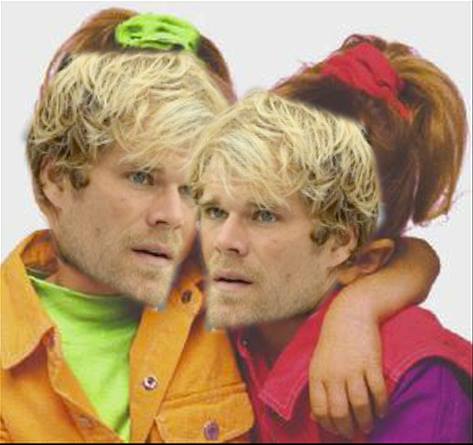
To this day, I am still prone to Tweet “Flames…on the side of my face”, quoting Madeline Khan’s famous speech (the only improvised moment in the whole movie) and those who know me well know I am having a terribly frustrating day.

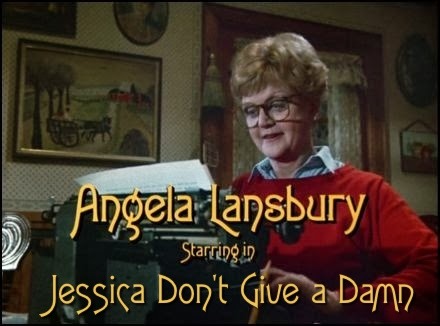
Clue is not the only murder mystery of 1985 worth talking about though. The long-running Murder, She Wrote wrapped its first season in the spring of 1985, and I don’t think anyone expected it to continue on for 12 years, finally concluding in 1996. Along the way, the show’s star, Angela Lansbury, earned an Emmy nomination for Best Actress every single season the show was on the air. She is 90 years old and still kicking, probably because of her positively spectacular workout routine. Her character, Jessica Fletcher, made jogging cool years before it was in, she had a home remedy for any health problem you may encounter and, while she tends to bring in a wave of death and destruction wherever she goes, she is always a model house guest.

Oftentimes when people complain to me about older television, they suggest it is formulaic and repetitive. I can understand that, when it comes to Murder, She Wrote, yes there is always a murder at the heart of the episode, but beyond that the rest was completely up in the air. Here are a few things Ms. Fletcher did over the course of the run of the show:

Inherited a professional football team, taught in a women’s prison and then saving said prison from an inmate riot, tried to find her niece’s missing husband at a traveling circus, helped Russian ballerinas defect to America, Wrote a children’s book and adapted it into a puppet show, visited an Amish community, solved a murder on a plane, designed a house of horrors for an amusement park, got Magnum PI off the hook for a murder, and solved a mystery of why she was being haunted by a ghost witch.

If you don’t find this show to be immensely feminist and transgressive, I think your standards might be too high. The mystery at the heart of the plot is fun to solve and all, but the real surprises are where Jessica might pop up this week and which soon-to-be celebrity would play the accused, the victim, the murderer, or one of her seemingly endless nieces. The show had to be inventive and creative out of necessity once their star got up
into her 70s, and the results are a kooky show about a lovely lady in Maine who has inexplicably witnessed like 250 murders, but still manages to make Cabot Cove feel like home. (Shameless plug, but my very talented cousin Joel wrote a delightful song about Cabot Cove I have to share):

One of the reasons I am so quick to plug Joel whenever I can
is because, as a lifelong lover of musicals, I get so excited that my cousin is
so adept at musical theater composition. As kids, he would direct plays we
would appear in. They were made up stories that pretty much wholesale took the
plot of other stories and tinkered with them slightly, resulting in living room
productions like “The Gizard of Oz”.

My mom was the one who got me hooked on musicals in the
first place, but while she tended towards the classics like Oklahoma and Meet
Me in St Louis, I started to dabble at a relatively young age in more edgy and contemporary
musical theater. My first foray into musical theater songs though were ones I
didn’t even realize belonged to a show.

I don’t really know if little girls have music boxes
anymore, but as I child I adored them and collected several. The little diddys
the spinning ballerinas in the boxes danced to varied, but would almost always
be one of three things: The Music Box Dancer, Memory from Cats, and On My Own,
which was added to the musical Les Miserables when it began its
English-speaking run in London in 1985.

When I was five or six, I thought these songs were the most beautiful songs on Earth. The more I attended dance competitions, the better I got to know them, as nearly every preteen girl had latched on to On My Own and wanted to do a passionate dance to a song that understand how it felt to have the guy in fourth grade you had a crush on not pay attention to you. It was only as a teenager that I learned the true origin of the song was for a character that was doomed to a life of suffering with no parents, no love, just herself. In context, the song makes the personal experiences I associated with it as a child pretty petty, but the tune nonetheless serves an important purpose. As a song in a very adult-themed show that any child can relate to, it gets young musical theater fans like myself in the pipeline. You start with Wizard of Oz, then move on to Cats and On My Own before you eventually get shown Grease and you realize musicals could be a lot more than you really thought they would be.

Just how expansive is the musical genre? It remains a mystery to me now, even after watching any musical I can get my hands on, as all the new ones keep pushing the boundaries further and further. That is okay though. Figuring out the answer is the fun part anyways.
Scoring My Life Archive


1984: Learning to Pretend, to Empathize, and to Love

image

(If you want to know why I am talking about 1984, I explained myself yesterday)

There is a concept in media studies called monoculture. The name explains the idea to some degree, but this Salon piece offers a more precise definition if you’re interested. TV and music have become highly personalized experiences these days. Unless it is a massive event like the Oscars or the Super Bowl, people just don’t watch things live anymore, so there is no real communal experience.

Movies are the last real holdout of monoculture. Sure, there are more movies now than ever thanks to technology, but studio slates are still relatively small and consist mostly of tent pole pictures, the big budget action movies like Avengers that need to gross a billion dollars in order to recoup costs and fund the studio for the next year.

But every once in a while there is a not so big film that develops a cult following in the rental (I guess now the better term is streaming) space. Such was the case with the 1984 fantasy film The Neverending Story. Yes, it was a hit in the theaters, grossing over $100 million back in a time where that feat was still impressive.

But this existential sci fi film so fantastical and psychologically based it could only come from the minds of the Germans continued its success on home video. A German book that was unique in that it was printed in different colored inks to signify what was the book and what belonged to a book within the book, it was directed by German-born Wolfgang Peterson.

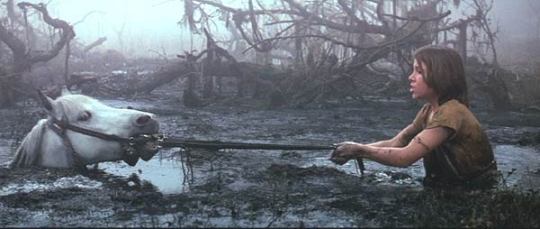
Really, could anything but German Expressionism be responsible for the sequence in the film when the fantasy’s hero of the book within the book Atreyu loses his beloved horse, Artex? If you’re not familiar, let me set the scene. Atreyu and his steed are riding through the Swamps of Sadness, which literally can overcome you with a melancholy so heavy you sink into the sludge. While brave Atreyu managed to fight the negativity, his white horse could not and, despite Atreyu’s best efforts, he dies:

In elementary school, I cited this as the saddest scene in film history, as did most of my peers. It wasn’t specific to Lexington either. I asked my cousin Mollie, who is a year older than me and grew up in Memphis, what part of Neverending Story she most remembered (awesome theme song excluded).

“Oh, when the horse died. So traumatic.”

In retrospect, the proliferation of clinical depression in people my age might help to explain why as kids this scene stuck with us.  As kids, we fear the villain of the movie, The Nothing, the idea that our wildest dreams and imaginations could disintegrate, leaving us living in a vast void all by ourselves. We rely on our imagination and books to fill those empty spots in our everyday lives. We start to develop the sense that the sadness in our life might get so overwhelming we can’t go on, and it is a fear that tends to grows stronger the older you get.

As an adult, I rewatch that scene through an entirely different lens, realizing this movie may have been the first thing that helped me understand what depression was. You watch your friend slowly sinking into the swamp seemingly indifferent to saving themselves while you pull and scream and do anything you can to get them to snap out of it to no avail.

It also helped to instill a sense of empathy, as I cried along with Atreyu at the thought of losing his friend. Yes, it made me sad to see, but I loved the movie for being so powerful as to make me care about someone else’s horse, especially a someone else who didn’t even exist.

I was really big on pretending as kid, so imaginary friends and fictional characters were par for the course, really. I could entertain myself alone in the backyard for hours, turning my swing set into a spaceship racing along with the Hanna Barbera cartoons or My Little Ponies’ castle. I spent a disproportionate amount of my youth in front of a television, but when I look at my nephews, I realize a lot more of my childhood involved playing pretend than theirs does.

If there was a show of my childhood that embodied the power of pretending and imagination the way The Neverending Story did, it would be Muppet Babies. The show premiered in 1984, just two months after Muppets Take Manhattan featured a dream sequence of baby Muppets dancing about a nursery.

In the show, the nursery was rarely the nursery though. Instead, it was a pretend spaceship, a pretend dude ranch, or a pretend newspaper:

The way Muppets pretended was very similar to the way I did. We would take some piece of cultural and basically perform fan fiction, elaborating where the story left off. It is a cultural creation strategy that has grown beyond pretending in the backyard to pretty much how all non-original TV shows and movies are made. In film criticism, the term is “pastiche”, which is taking a lot of elements from other pieces of culture and slapping them together, relying on the appeal of the artifacts to make the new piece interesting (like this). Quentin Tarantino does this, and it is the source of the greatest praise and the greatest criticism of his work.

This is classified in cinema as postmodernism, which is characterized by throwing back to older works, often blending a number of genres together, smashing high art into low art. It is very common in blockbuster movies, but it can apply to other things too, like music.

The Billy Joel concept album An Innocent Man is a great example of postmodernism in music. The album, which includes songs like Uptown Girl and Leave a Tender Moment Alone, is intentionally crafted to sound like songs from the 50s and 60s even though it was released in the 80s. It works because, sure, people are always intrigued by new, interesting sound people also like what they know.

It was the 90s by the time I discovered the Billy Joel song The Longest Time, but I loved it nonetheless. As someone who missed a lot of the 80s because my parents never listened to contemporary music, Billy Joel was off my radar for a long time. But once I started listening to music made after 1970, An Innocent Man was the album I latched onto first. I think of Joel as the bridge between a childhood of growing up on oldies music and an adult life of liking more modern music, preferably performed by a soulful dude with a piano.

It is a beautiful thing to fall in love with a song, which is exactly what happened with The Longest Time. It is an interesting thing to fall out of love with one though. I cited this as my favorite song for several years, until a friend of mine and her husband (who I was always rather critical of) decided it was “their” song. They also walked down the aisle to Ben Folds’ “The Luckiest”, another piano tune I spent much of college completely obsessing over.

There are certain things that, once associated with a song, you just can’t get past. We’ve all had a “song” with a boyfriend or girlfriend that becomes too painful to listen to for a while (it is another story for another time, but there was a year where I couldn’t listen to VeggieTale’s “His Cheeseburger” without crying). That is how I feel about The Longest Time and The Luckiest now. These were two songs I loved to listen to, imagining a life with my husband in which we shared the sentiments of these songs in the grown up version of pretending–daydreaming. While it is not a break up, knowing these songs were tied so closely to a relationship I wasn’t particularly fond of ruined my ability to pretend when listening to them, in turn ruining the songs not for any artistic reason, but because life decided it was time to change the playlist. It was too real, too tied to something I didn’t like much at all. Funny enough, I have since come around on the relationship, but the song continues to be one I just can’t listen to, nor will I be able to for quite a long time.

Scoring My Life Archive

1983: Return of the Jedi, Taxi, Faithfully

1983: A Fateful and Faithful Beginning

(For an explanation of this year-by-year cultural exploration, check out this introductory blog post)

I just missed out on being born in one of those easy-to-remember, apt to be culturally compared years when I came into the world late in September 1983, missing out by just three months on a whole lifetime of Orwellian comparisons. According to most generational groupings, 1982 is the cutoff for being a Snake Person, but let’s be honest. If you call me a Snake Person, I will poke you in the eye.

I prefer the generational designation determined by Barney Stinson of How I Met Your Mother fame. He calls it the Ewok Line. The line exists exactly ten years before the release of Return of the Jedi, dividing the world into two camps: those who like Ewoks and those who hate them. This is a generational division I can get behind.

Not only do I love Ewoks, as an adult with multiple film-related degrees, I cinematically evaluate the last chapter of the original Star Wars trilogy as the best. This is sacrilege, I realize, but Empire Strikes Back is far and away the worst movie to me. It can’t exist without the other two. No one can just watch Empire and have a satisfying cinematic experience. The movie starts in media res, there is no real begin. Nor is there much of an end. It is just a couple hours of myth- and world-building with no real payoff for your time and attention other than the Darth Vader reveal. I mean, half the movie is Luke running around a planet with only a Muppet to keep him company in what amounts to intergalactic Cast Away.

I feel this way about the middle chapter of most everything. The Two Towers is the worst Lord of the Rings movie, The Lost World is the worst Jurassic Park, Temple of Doom is the worst Indiana Jones, and The Matrix Reloaded is the crappiest of the three crappy Matrix movies. There are a couple of exceptions like Toy Story 2, Back to the Future II, and Godfather II (which doesn’t count because Godfather III doesn’t exist), but by and large my beef remains the same: if this movie can’t stand on its own as a quality piece of entertainment, I can’t possibly call it a good movie.

Return of the Jedi though, that is a satisfying piece of cinema. It begins by getting the gang back together with an escape caper, throws in a little romance, a little family, a lot of action, and an uprising by the most cuddly adorable bunch of rebels you’ve ever seen. I’ve spoken before about my contrarian love for Ewoks, but really Stinson hit the nail on the head: I saw this movie on the wrong side of the Ewok Line. I may not be a Snake Person, but I am definitely a sucker for Wicket.

The movies of 1983 may appeal to my youthful side, but the TV of 1983 goes straight to the heart of my old soul. The year of my birth was the end of one of my all-time favorite shows, the sitcom Taxi. Technically the show ended in June of that year, three years before I was born, but since Danny DeVito didn’t collect his final Emmy for portraying Louie DePalma until the fall of ’83, I’m going to go ahead and count it. While many sitcoms of today are praised for their sophistication and nuance, most of the shows are unabashed comedies with all of the sentimentality of the 80s and 90s zapped out of them, leaving the schmaltzy stuff for dramedies to handle. This was a show that could simultaneously be hilarious and heart breaking though. I mentioned recently Elaine Nardo’s mental breakdown. The incredible pair of episodes called Memories of Cab 804 bucks generic sitcom conventions with a series of vignettes featuring each cabbie and their favorite or most memorable Cab 804 experience. It is a remarkable bending of form with some unexpected and hilarious moments, particularly in DeVito’s section. It also features some sensational guest appearances from the likes of Mandy Patinkin and Tom Selleck.

The oscillation between pointed and poignant will always be the defining factor of my favorite TV shows. Sure, I think sentimentality can be manipulative and base, but I think shows that refuse to indulge in even a moment of emotion are cop outs.

And if you’re doubting whether or not the show is really funny because old stuff can’t be funny, just check out Jim Ignatowski
(Christopher Lloyd) taking his driver’s test:

As for music, this is probably a good time to preface this very important fact: I have terrible taste in music. I like very random bands. Many of the bands I enjoy are guilty pleasures for some that I thoroughly enjoy in a wholly unironic way (Haven’t we all seen Air Supply play live?). Then there are the bands that I came to long after they were popular. Having been raised on oldies music by my parents, it was totally normal for young me to be obsessed with Elvis or the Beach Boys or Johnny
Rivers
.

As I progressed into my adolescence, I became infatuated with 80s music thanks to movies like Romy and Michelle’s High School Reunion and The Wedding Singer. I don’t know if it was the result of these movies or just a remarkable case of happenstance, but as I neared the end of high school, Journey’s Don’t Stop Believin became an anthem of sorts for our generation. This was long before The Sopranos used the song for its series finale and a good decade before Glee made this one of the most popular downloads of the aughts.

A Bustle article does point to The Wedding Singer as the modern movie that sparked the song’s comeback, but I feel like it is more than just the decidedly 80s feel of this song. When I think of the songs my friends and I belted in the car in the years each of us learned to drive, they had one thing in common. They were all power ballads, songs with a chorus that repeats after the bridge, building momentum each time around, which is the key to any overdramatic teenaged girl’s heart. In my youth it was Wilson Phillips’ “Hold On” and Madonna’s “Like a Prayer”. In the age of boy band pop and the rise of punk that embodied my teenage years, there weren’t that many rock ballads to choose from. I remember Eve 6’s “Here’s to the Night” and the New Radicals’ “You Get What You Give”, but really it was those songs of the 80s and the occasional one-hit wonder that blared on our stereos and we belted as loud as we could.

We were also small town girls, living in lonely worlds as we sat around Lexington, Kentucky waiting for the day we headed off to college and bigger and seemingly better things. Once there though, this song reached the point of being overplayed long before it was on The Sopranos, that I tended to write off Journey altogether and instead spent my freshman year listening to the much-maligned Chicago in my dorm room with Heather Demetrios.

Before Glee even made it on the air, I knew I would be watching it. I have been a fan of the show’s creator, Ryan Murphy, ever since he launched the show Popular back in 1999. The creative mind plus the concept bearing a more than passing resemblance to my own high school experience in a performing arts high school meant Glee was right up my alley. It also meant I wasn’t surprised at all that Don’t Stop Believin was the anthem of the New Directions Glee Club, since it was our high school anthem too. But it was another song that struck me in the first season —Faithfully.

I am and always will be a sucker for a good cover song (there is so much more to explore covering a song than remaking a movie imo) that this song, which first came out in 1983, came to my attention a quarter of a century later when Lea Michele belted it alongside the late Corey Monteith.

As a girl who spent her life on the road during most of her 20s, this whimsical tune about a couple in love that has weathered the ups and downs, the new towns, and the old problems resonated with me both as something I certainly wanted in my life, but as an example of how the lesser-knowns and the B-sides can often offer so much more than the long-lasting singles.

I cite the episode of Glee with the Journey medley at the end of Season 1 as one of my favorite performances along with the Valerie medley at regionals the following season. I don’t pick Journey and the pilot or the Britney episode or the other obvious contenders, and I admire when fellow fans eschew the obvious as well. I was born to prefer the not-so-beaten path in 1983 and it is a preference I will faithfully stand by for the rest of my life.

Scoring My Life: A Movie, A Song, A Show

Perhaps it’s watching all that Hindsight, perhaps it is because I am spending time with family, either way, I’ve been living in the past a little these days. Part of it is because I find the direction the world is heading very off-putting in many ways. Sure, there are technological advances and great things are happening, but there are plenty of other aspects of life in which character traits I am not fond of are cherished and values I hold are cast aside. I’d like o believe things are different and this is the time life really is taking a turn for the completely different, but the truth of the matter is this: I’m just getting older.

As my friend Jeff will constantly tell me, there is little to gain living in the past. Embrace the future and what it holds. Thing is, so much of our cultural future are comprised of haphazard remakes of quality relics of our cultural past. The fourth-highest grossing film in history is a crappy “reimagination” of Jurassic Park that makes JP3 look like Shakespeare. The latest Terminator tries to become the best by actually rewriting history such that the others never happened. Yet, here people are clamoring for these titles instead of watching the classics. As much as old does not equal better, or so my friends lecture me, new does not mean good

So, as I have done in years past on this blog, it is time to embark on my latest mission to remind the world of the oldies but goodies. And because I can’t just recollect pop culture without some sort of personal reflection to go with it, I thought it was time to take score of my life with a movie, a song, and a show. Here is how things will work:

For each year starting with my birth year, I will highlight one movie released in that year, one song released as a single that year, and one television show that aired a full season during that year (doesn’t have to be new for TV, as there were far fewer new shows each year back in the 80s). These won’t necessarily be my favorites from when I was living each year, but each will be not just a piece of pop culture I enjoy, but one that has had an impact on me or illustrates a concept form my life that the modern world may not be able to understand.

So we’re taking a stroll down memory lane for the next month or so, hoping we might be able to take these lessons of the past and start re-evaluating how we approach the future.

The Mental Game of Girls on TV

Very early in the second season of the sitcom Taxi, Elaine
Nardo (Marilu Henner) has a mental breakdown. Stressed out raising two kids,
working as a taxi driver, and trying to make a name for herself in the gallery
world, she hits a wall on the night of the big art show she’s been put in
charge of and tells her art gallery boss in a very dramatic way.

Alex (Judd Hirsch), who is her closest friend at work, piles
her into his cab and tries to take her home. Distraught, frustrated, and still
out of sorts, she makes a pass at him. While flattered, he refuses and thinks
she is just running from her problems, looking to distract herself with him.

The rest of the show follows Elaine as she visits a
psychiatrist for the first time, which is both a funny and heartbreaking scene
about a divorced woman trying to balance her priorities and the needs of her
family. The episode concludes with Elaine talking with Alex at the taxi
dispatch center about her progress and how much better she is getting.

Then something even weirder than Elaine’s behavior
happens—the show continues on as if Elaine never had this setback in her life.
It doesn’t really get brought up again and Elaine, while her neurotic self at
times, seems generally well-adjusted. She had a brief lapse from her normal
self and now she is back to her old self.

If you’ve ever known someone who struggles with mental
illnesses, you’re chuckling at the preposterousness of this whole thing. I have
to give one of my favorite sitcoms credit for even tackling the subject for an
episode back in 1979. When I look around the classic TV landscape, I struggle
to find women who are struggling. Yeah, Mary Richards was single, but look at
her adorable apartment and her life filled with friends, joy, and the best
winter coat collection I’ve ever seen. Kirstie Alley’s Rebecca Howe on Cheers
was a little hapless at times, but she wasn’t teetering on the edge.

I guess there is Marcia Cross’ Kimberly Shaw on Melrose
Place
, but she was not some sympathetic heroine. She plants a bomb, she runs
down people with cars. This is not someone girls sympathize with. I will also
give the GOAT (sorry HBO and Mad Men fans), The Dick Van Dyke Show, some
serious credit, as in the 1950s they regularly returned to the unhappiness,
loneliness, and frustration of Sally Rogers, the single gal in the writing room
who was one of the boys, couldn’t relate to the girls, and couldn’t seem to
find a man. Thing is though, Sally, while lonely, was always presented as happy with bouts of sadness.
She is a self-assured girl who can get down on her situation, but
ultimately appreciates what she has.

All these women were so fundamentally capable though. They
got along fine. They were happy with their lot, even when it wasn’t much.

Then Buffy came along.

I don’t think I’ve mused much on Buffy in here before, so it
may surprise some to hear the huge impact the show had on me as a teenager.
This was a girl who was given a lot in life, being the slayer, that she
categorically did not want. In the first four seasons, she managed to both kick
ass and have a semblance of a life, but then things got dark. Really dark.
(Spoiler alert, non-Buffy watchers).

In Season 5, Buffy loses her mother in one of the most heart-wrenchingly
accurate and honest portrayals of losing a parent. The show didn’t stop there
though. At the end of the season, she dies. Then, when UPN saved the show from
cancellation, the show brought her back to life at the start of Season 6. Her
friends “saved” her from the afterlife, but she doesn’t tell them that they
didn’t help as much as they thought.

And for the next two years Buffy Summers was seriously damaged
goods. She managed to keep it relatively together around her friends, and she
certainly continued to kick ass, take names, and save the world. But behind
closed doors, she was a wreck. She made terrible relationship decisions, she
punished herself and hurt herself to numb the pain, and she felt completely
alone.

Moreso than her superhuman strength or her ability to save
the world, I admired Buffy’s strength in being able to put on a brave face and
go back in the world even when she didn’t want to. Unlike Elaine Nardo, who had
a brief lapse then returned to her normal chipper self, Buffy the Vampire
Slayer finally had a female admitting she is putting on a face most of the time
that hides how she really feels—which is miserable.

Then came Carrie Mathison of Homeland. This wasn’t just
Buffy dealing with a lot of shit. This was a chick with a mood disorder she’d
been dealing with her whole life, a disorder that inhibits her day-to-day life,
but also makes her exceptionally good at her job. As someone with bipolar
disorder, Carrie has periods of mania, where her intense concentration helps
her see things her peers at the CIA may not. A recurring storyline throughout
the first three seasons is her unwillingness to medicate because she feels it
clouds her ability to do her job well, and since her job is something basically
a dozen of people in the country are even qualified to do, she is kind of
justified in not wanting to put feeling happy first.

Yes, seasons 3 and 4 of this show go way off the rails and I
think Carrie goes from being relatable yet unstable to, well, Kimberly Shaw,
but for that amazing first season, Claire Danes justifiably won every
performance award because she was a wreck, a hero, a woman, and totally
realistic.

Now, my capable mess du jour is Shiri Appleby’s Rachel
Goldberg on Lifetime’s UnREAL. Don’t let the Lifetime or the reality show
premise fool you—this is an incredibly perceptive and well-written show
starring a wholly unglamorous girl who is barely holding her shit together, but
has one saving grace: she is incredible and finding ways out of messes and at
doing her job. The more we get to know Rachel, the more we realize that, like
Carrie, the things that make her good at her job as a reality show producer are
what her friends and family think are mental defects in her mind that need to
be fixed. Unlike Carrie though, she isn’t as sure that she wants these parts of
her mind running at full speed anymore. She isn’t really sure what she wants at
all. All she knows is how to survive, and how to do it on her own.

While Elaine, Buffy, Carrie, and Rachel all vary a lot both
in how their mental anguish is handled and what the “normal” version of them
looks like, the uniting factor that makes me love them all remains: sure they
ask for help from time to time, but when push comes to shove, these women, no
matter how “damaged” they may be, handle their business themselves. They don’t
need a guy, they don’t need a prescription, they just need their own skills,
some good decision making, a few supportive friends, and their own drive to
just get through life, as rough as it may get.

���t�_

“Hindsight” Is a 10/10

I may not be as into time travel movies as my dear friend BJ
Nemeth
, but there is a specific set of time travel pop culture I can’t get
enough of, and those are the small-scale time travelers. Not Terminators on a
mission to destruct, but more quaint time-travelling stories; the kind where
the hero returns aiming to correct one mistake rather than save the world or
throw the universe in parallel.

I didn’t realize how preoccupied I was with the small-scale time
travel movie initially, but looking back (as one is wont to do when dwelling on
time travel), I realize that I rank The Time Traveler’s Wife in my top five
books, movies I adore include The Lake House, About Time, and the
quintessential second chance movie, It’s a Wonderful Life.

As someone who constantly goes over and over decisions in my
head both before and after I make them, the lure of getting to go back and
change something is a fantasy I don’t want to pass up. 

My butterfly effect fantasies and my nostalgia for days gone
by means that the VH1 scripted show Hindsight (now available on Hulu) is one of the better pop culture
products to happen to me in the past year. The show is based around a woman,
Becca, who magically passes out in elevator in present day the night before she
is to get married for the second time only to wake up on the day of her first
wedding back in 1995.

It isn’t much of a spoiler to say that, given the do-over,
Becca decides to bail on the wedding, thereby sending her life in a whole new
direction. Thing is, the more Becca thinks she has things figured out based on
her experience from the future, the more her attempt to auto-correct her life
choices has unexpected results. Some work out fine, others blow up in her
face, and some are yet to be determined.

While most time travel fantasy allows the viewer to believe
you can just go back and fix things, this show frequently reminds us that what
may seem like the easy spot to flip the switch and change things won’t
necessarily be an easy fix. I can pinpoint with eerie exactness the four
moments in my life I would go back and change. Oftentimes, I’ve relived these moments, dreaming they would work out
differently than they did, and I never think too much about the future
repercussions. I mostly just want the missed opportunities, regret, pain, or
anger that stemmed from these moments to dissipate. I think about what bothers
me the most and what I could change about the present, then I work backwards through my decision
making to a point that would have made a difference. It is a terrible hobby and I advise none of you take it up. Trust me, just watch Hindsight and let Becca do enough revisionist history for the lot of us.

When talking with my friend about what moments we would
change, he tried to guess my four, immediately assuming one would involve my
father. I felt a little horrible to admit he wasn’t on the list. It isn’t
because I don’t miss him or wish he was here, it is more that I don’t know what
I could’ve done as an eight year old to change his cancer. I will always regret
not giving him a proper goodbye, but beyond that, there was nothing I could
fix, as I was eight, not Doogie Howser. I suppose if I could wave a magic wand, I would wish him back to life, but
I would do so knowing how scary the results may be. If he had lived, I would
have left Kentucky at the age of 11, I probably would have never fallen in love
with movies, and I think I would be more of an entitled, spoiled competition
dance girl than I want to admit to. It is also entirely possible I never learned about sarcasm, if you can believe that. In other words, I would bear no resemblance
to the person I am today, which is a little frightening to consider because I
miss my dad more than I can describe, but I have also grown a little accustomed
to the me that grew up without him, and I think the me that had him would be
lacking a certain amount of mental fortitude and cynicism only losing a parent
at a young age can instill.

Therein lies the wonder of “Hindsight”. Sure, Jimmy Stewart
and the people of Bedford Falls showed how much one life can change things and
Ashton Kutcher made that Butterfly Effect thing, but this show explores the
tiny shifts one decision can make, and how some things can’t be escaped no
matter what you change. In the show,  Becca learns that this can be both a blessing
and a curse. So, the show is more than just a fantasy. Unlike other time
travelers, Becca has no mission, in fact, she is not sure why she ended up back
in the past at all. She gets a chance to try again, but there is no roadmap to
success, no end goal to achieve, just a long list of regrets and what ifs.

The other wonderful aspect of this show that revolves around
one character’s future is its nostalgia for the past, namely the 90s. The crux of the show is Becca’s attempt to fix her past mistakes and the 90s setting has its moments and jokes in the spotlight. (”Patrick Dempsey got hot. Trust me, no one was more surprised than me.”) Some of the limited technology of the 90s plays a huge and sharp role in the plot, namely in Becca’s career. Rather than pull a Biff and buy an almanac, she uses her advanced knowledge in a much more creative way. Plus, the various romantic storylines are complicated by the uncomplicated technology around dating 20 years ago. Imagine
dating without texting or the internet.  I actually might add a fifth moment to the
list where I go back in time and somehow sabotage texting technology so dating
could be a little simpler and maybe wouldn’t involve the word “swipe” so much. 

It is a fun romp through an era that hasn’t been quite as commodified as the
80s. The 90s was an era I’ll always sentimentalize because at a time in my life
where I was skeptical about everything and skepticism was embraced as the norm.
There was no guarantee the future would be big and bright, so we looked through
the past, trying to cultivate the unexplored and awesome things that had
already transpired rather than blaze trails in the future. I wore hippie clothes from Gadzooks, listened to grunge
covers of School House Rock, then went home and watched Nick at Nite. I wasn’t
interested in the present, let alone the future, so of course now, twenty years
later, I am completely invested in a show about shaping your future entirely
set in the past.

You don’t need to be a dweller in the past or an old soul to appreciate this show. It is for anybody who wished for a do-over every once in a while. And people who get Melrose Place jokes. Both crowds can find things to like about this show, but if you fall in both categories I will go out on a limb and say this is a gem of a show you are truly going to love.

���/�g��%